How can you get the most out of your PV system and energy storage? With fluctuating electricity prices and ever-changing weather conditions, it is easy to lose track.
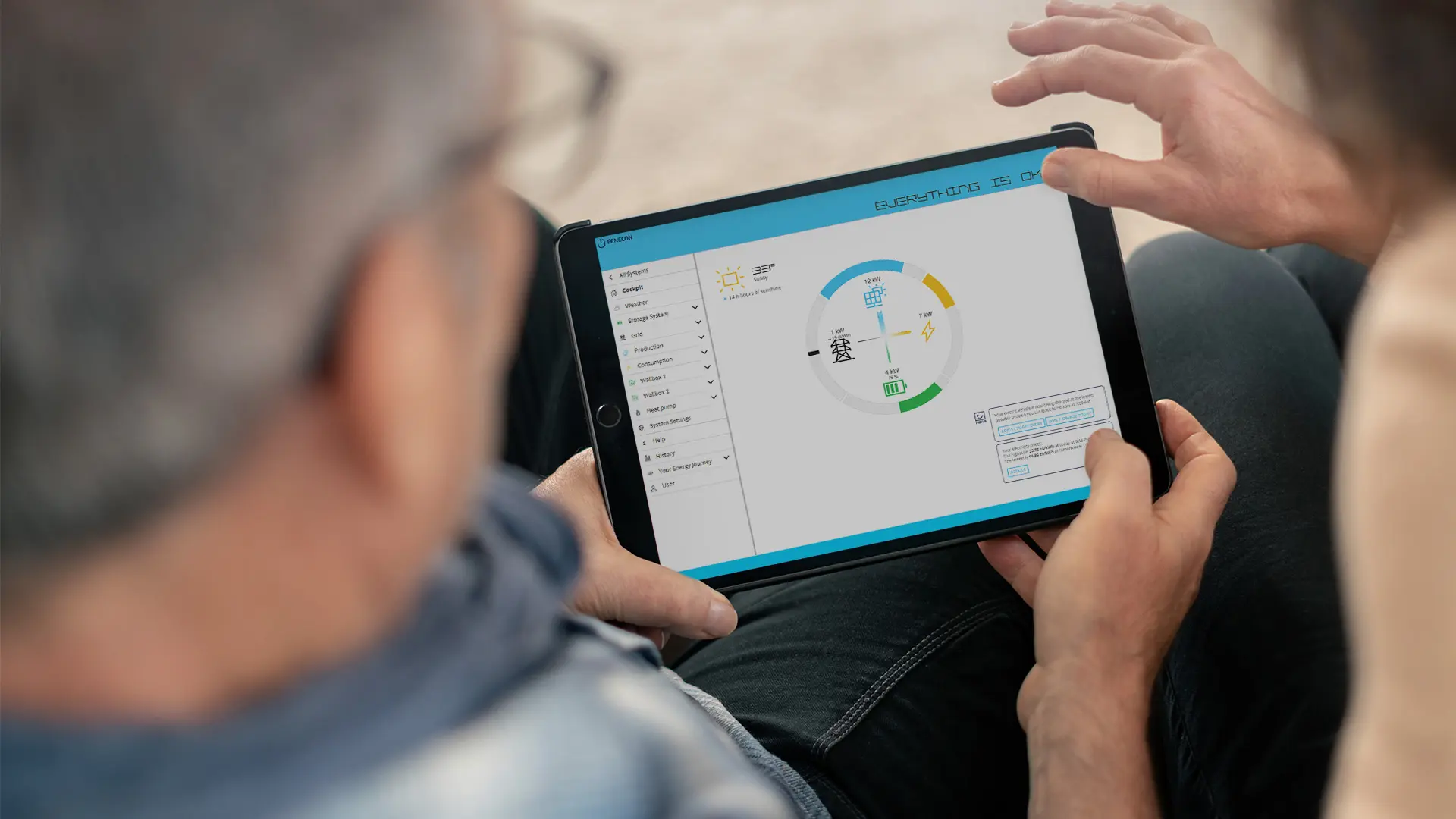
The solution: your personal Energy Plan. Combined with the intelligent assistant FENA, it makes the energy transition at home simple, smart, and effortless. But what is it all about?
What exactly is the Energy Plan?
The Energy Plan directs your electricity to the right place at the right time. Instead of using energy reactively, it takes a forward-looking approach by combining weather and consumption forecasts with real-time electricity market prices. The goal: to use every kilowatt-hour as efficiently, cost-effectively, and sustainably as possible.
Who or what is FENA?
FENA is your digital energy assistant in the FENECON app, serving as the forward-looking co-pilot of your energy system. At the heart of it all is the intelligent energy management system FEMS, which continuously analyzes data. Simply define your preferences through a Smart Event, for example, “Charge my EV by tomorrow morning,” and FEMS automatically creates the optimal Energy Plan.
A Day with FENA: Putting the Energy Roadmap to the Test
What does an optimized day look like in real life? Here's a sample 24-hour Energy Plan showing how intelligently the system adapts to Time-of-Use Tariffs, weather forecasts, and your individual requirements.
03:00
The user had defined a Smart Event the previous day specifying that the electric vehicle should be sufficiently charged by 7:00 in the morning on weekdays. FEMS therefore schedules charging from the grid between 2:00 and 4:00 in the Energy Plan. During this period, costs are lowest thanks to the Time-of-Use Tariff and Time-Variable Grid Charges.
Focus: Charge your electric vehicle at the lowest price from the grid.

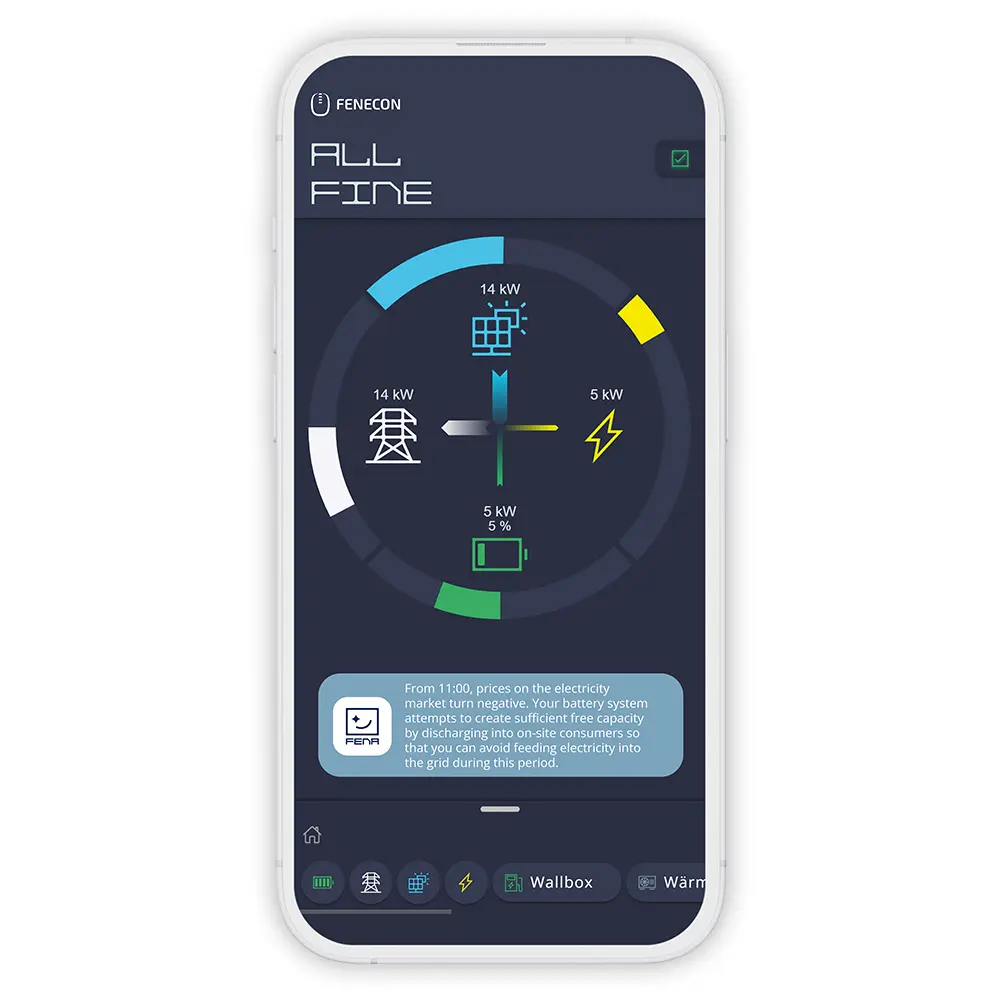
10:00
As electricity prices will turn negative from 11:00, and the feed-in tariff will therefore no longer apply, the Energy Plan is adjusted accordingly. In the morning, consumers are deliberately supplied from the battery while the available PV surplus is still fed into the grid as long as the feed-in tariff is in effect. Once the feed-in tariff is no longer available, the battery will have enough free capacity to be charged with PV electricity generated in the afternoon.
Focus: Surplus PV energy is fed into the grid as long as feed-in tariffs are available, while consumers are supplied from the battery system during this period.
15:00
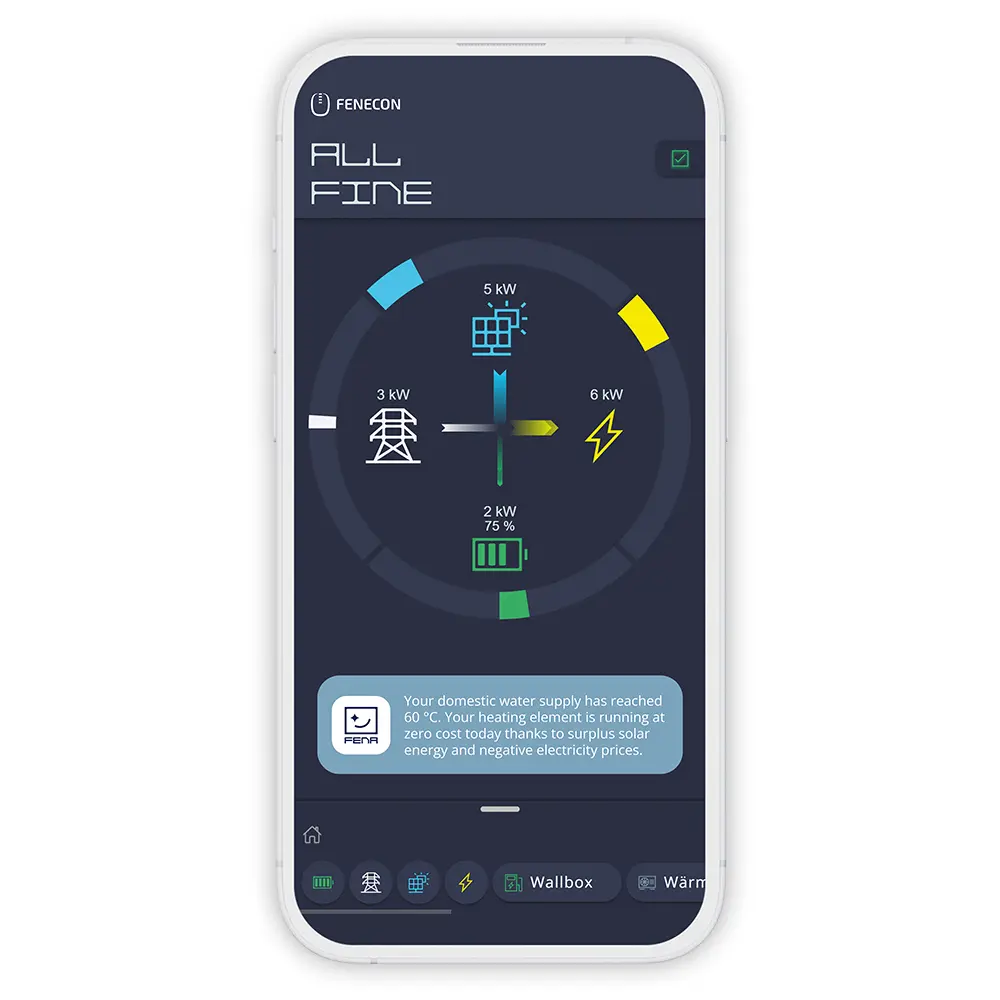
The user has created a Smart Event specifying that the domestic hot water should reach a temperature of 60 °C by 15:00. This Smart Event is taken into account in the Energy Plan: with electricity market prices remaining negative and no feed-in tariff in place, FEMS activates the heating element to use the available PV surplus for heating the domestic hot water tank. The heat pump is also activated.
Focus: Surplus solar energy as well as free grid electricity will be used to power heat pumps and other heating elements.
23:00
The weather and consumption forecast for the following day indicates that, due to unfavorable weather conditions, PV generation will not be sufficient to supply all consumers without drawing electricity from the grid. FEMS therefore ensures that the battery system is charged from the grid overnight during the most cost-effective time windows. The Energy Plan is automatically configured so that the storage is charged only to the extent necessary to minimize electricity costs from the grid.
Focus: You take advantage of low grid prices to charge your battery system.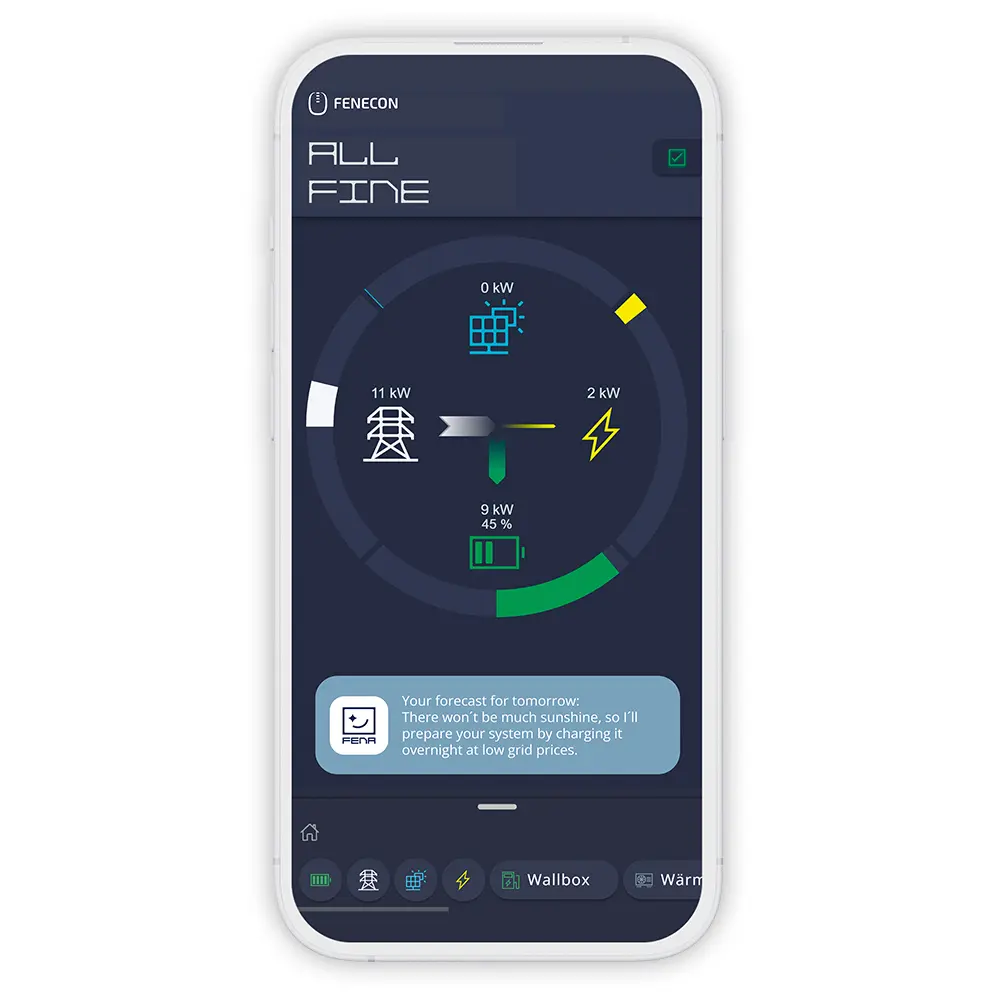
Sit back and save
The FENECON Energy Plan proves: modern energy transition doesn't mean you constantly have to compare electricity prices or manually turn on your washing machine at two in the morning.
With FENA and FEMS, you have a system that acts fully automatically, foresightfully, and always in the interest of your wallet and the environment. You simply set your preferences – your smart Energy Plan takes care of the rest for you!