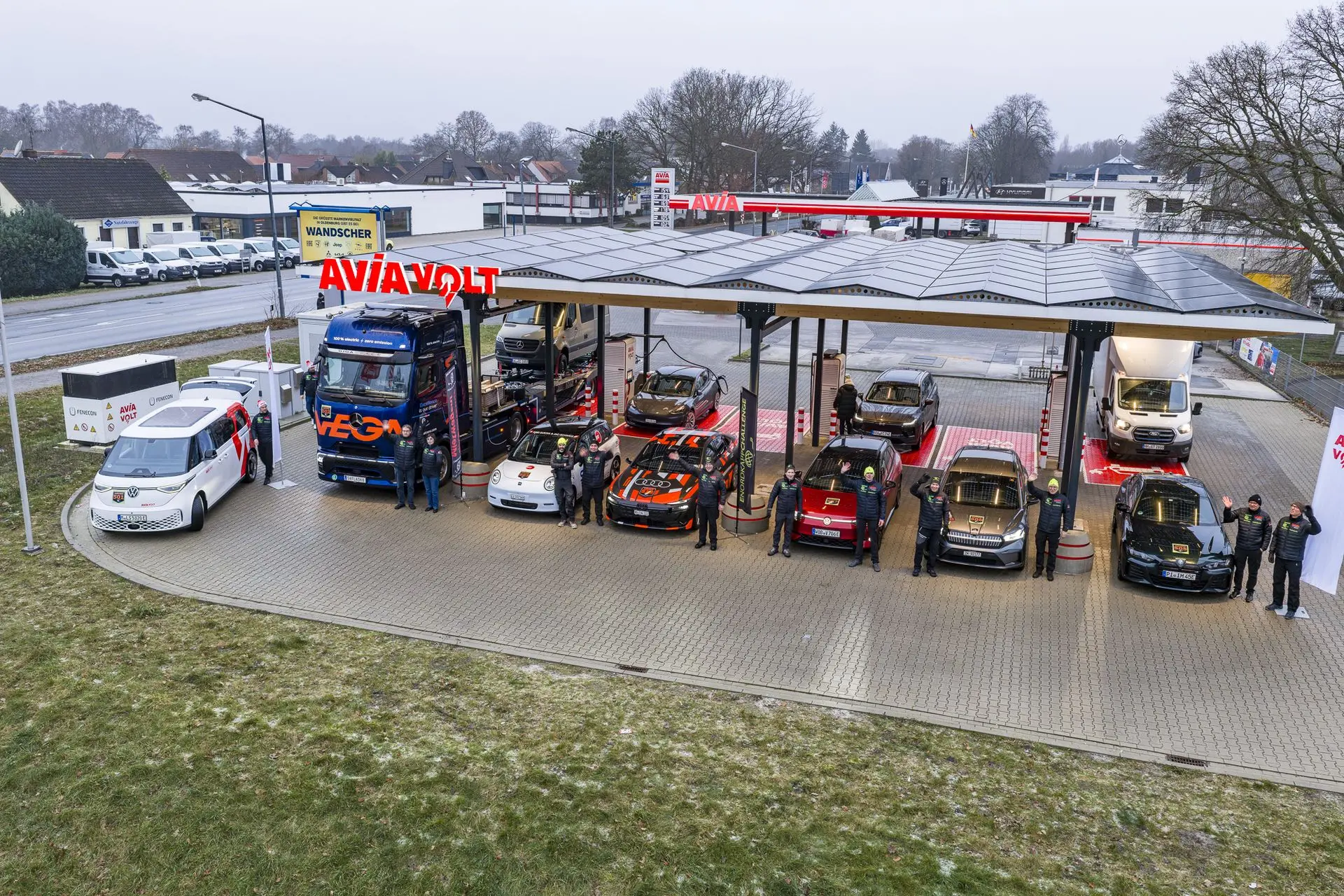
AVIA Volt combines the expertise of a medium-sized enterprise with advanced energy technology to deliver powerful and economically efficient charging infrastructure for commercial and private customers. The Oldenburg EV charging park integrates high-power DC charging, a battery energy storage system, a photovoltaic canopy, and energy management into a scalable overall solution.
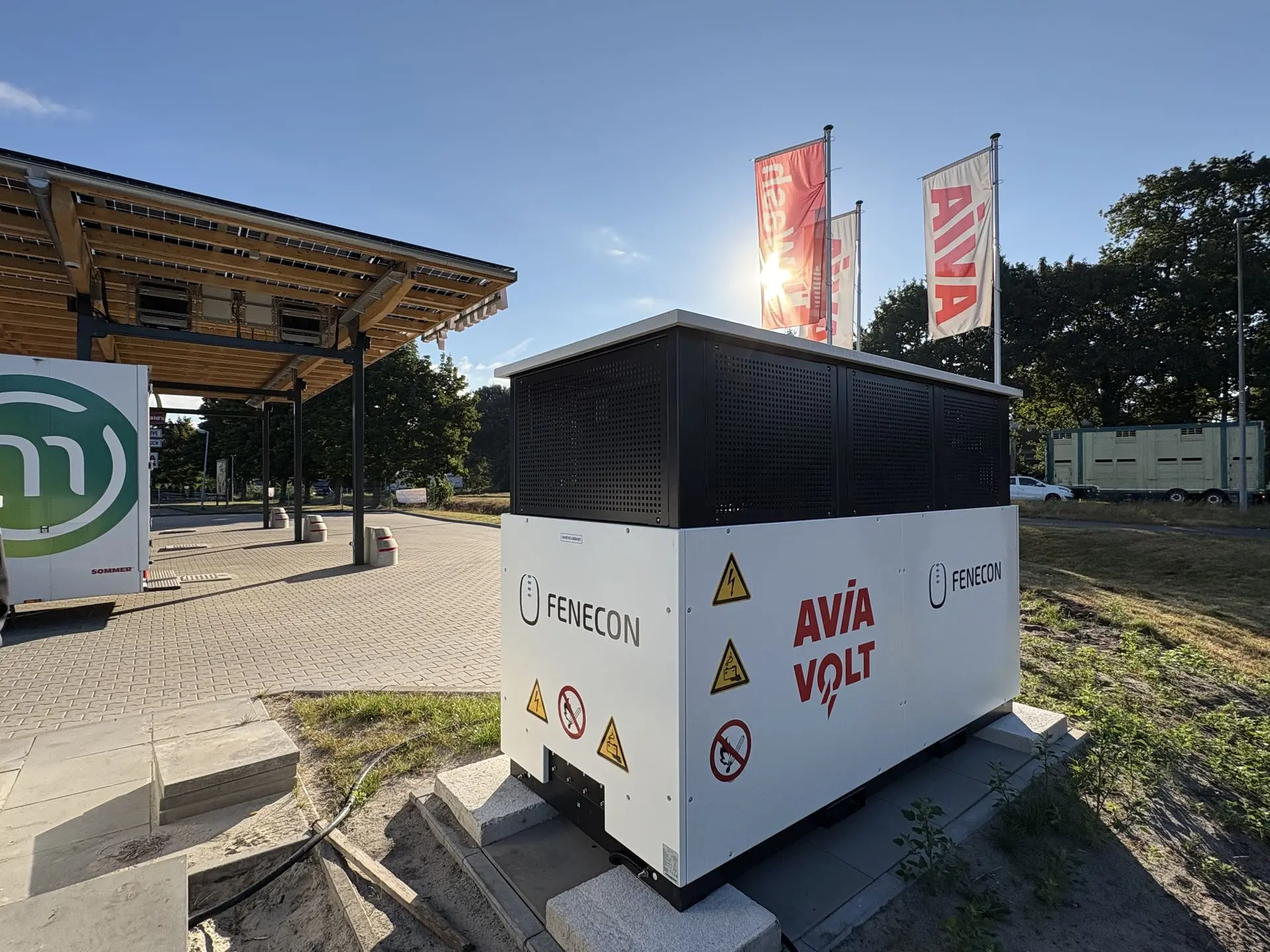
The project requirements were clear: high charging availability and performance, efficient use of the grid connection, and economically optimized energy management. The battery energy storage system supports load management, reduces peak loads, and enables electricity procurement at the most favorable rate.
- Optimal charging performance and high availability for customers
- Peak shaving to reduce strain on the grid connection
- Dynamic electricity procurement for economically optimized charging operations
- Integration of the photovoltaic canopy for local renewable energy generation
- Online Monitoring and controllable interfaces for the battery energy storage system, charging infrastructure, and EMS
Customer Profile
- AVIA Volt / AVIA Volt Weser Ems GmbH
- E-mobility / public HPC fast-charging park
- Bremer Heerstraße 295, Oldenburg, Lower Saxony Annual electricity consumption: Depending on the ramp-up of charging activity, between 400 and 800 MWh
- Integrated charging infrastructure: Six DC charging points with up to 400 kW charging power
- Photovoltaic canopy: Approx. 53 kWp, providing weather protection for customers and local renewable energy generation
- Additional PV system: 99 kWp installed on a neighboring building
Project Details
- FENECON Industrial S
- 184 kW power
- 164 kWh capacity
Application
- Peak shaving, charging power support, and dynamic electricity procurement
- Integrated into energy management, charging management, and Online Monitoring
- Installer: Elektro Grave, Edewecht
FEMS Apps in action:
FEMS Modbus Read / Write for integrating the battery energy storage system, charging management, and monitoring.
Results:
By combining a battery energy storage system, charging infrastructure, and energy management, the site is able to reduce peak loads, make more efficient use of the grid connection, and take advantage of favorable electricity price periods for charging operations. The focus is on delivering high charging availability with up to 400 kW charging power per charging point, while maintaining economically efficient operations.
Following the first months of operation, peak demand was reduced by approximately 180 kW, while the share of on-site PV self-consumption increased to around 96%.
Energy Journey:
The EV charging park has been designed with a modular and future-ready architecture. As the number of electric vehicles continues to grow, the site can be expanded with an additional six 400 kW charging points to meet increasing demand. Looking ahead, additional metering points, billing data, GHG quota-relevant meters, and further energy management functions can be integrated.
As a result, the Oldenburg site serves as a scalable reference project for AVIA Volt charging parks, demonstrating how high-power charging, battery storage, and local renewable energy generation can be combined in an economically efficient way.
“For us, the key objective was to implement a solution that not only enables high charging power, but also ensures the site is operated in an energy-economically efficient manner. The battery energy storage system helps us balance charging demand, grid connection capacity, and electricity procurement, while providing a scalable foundation for future expansion of the charging park.”
Dennis Eichert, Project Manager Charging Infrastructure, AVIA Volt